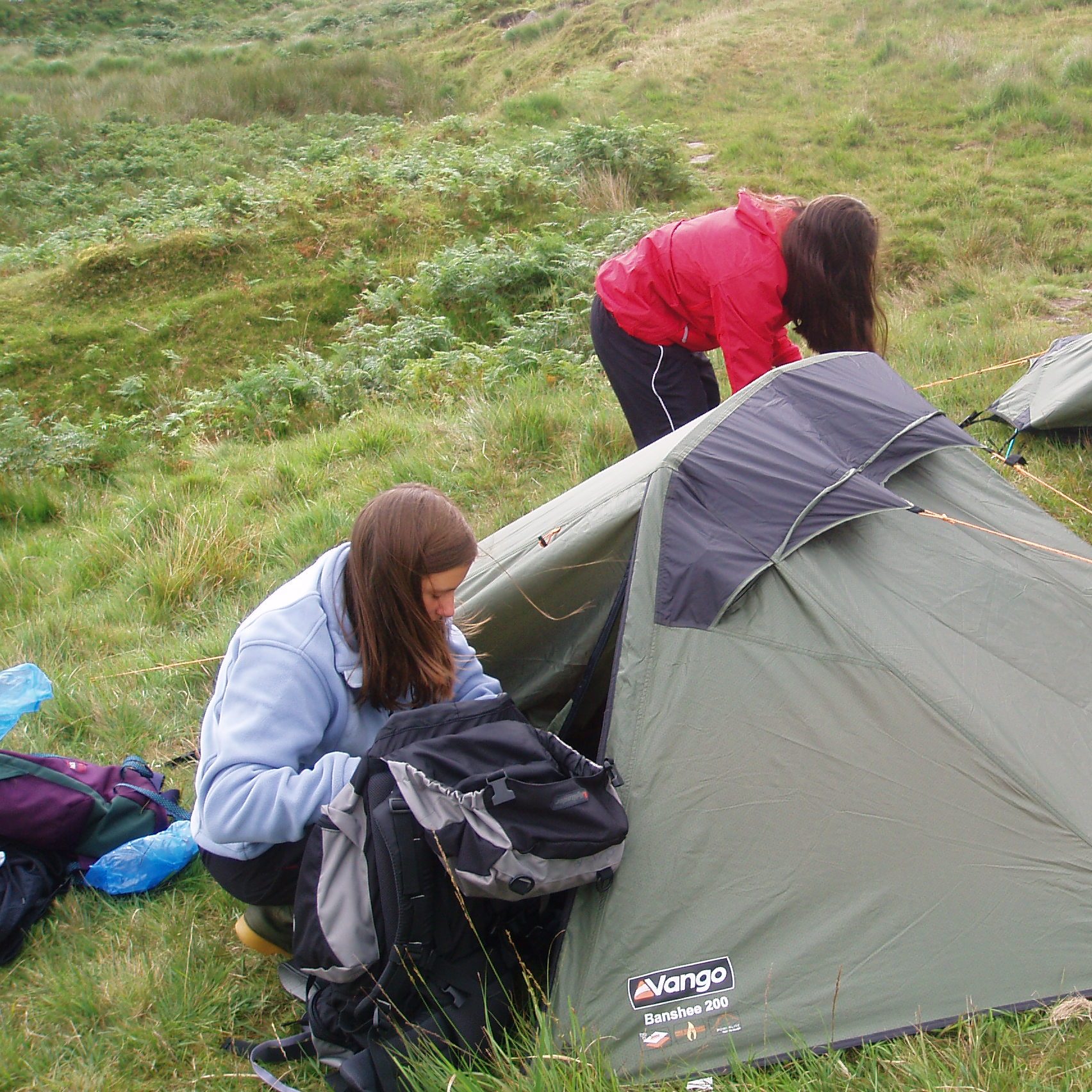
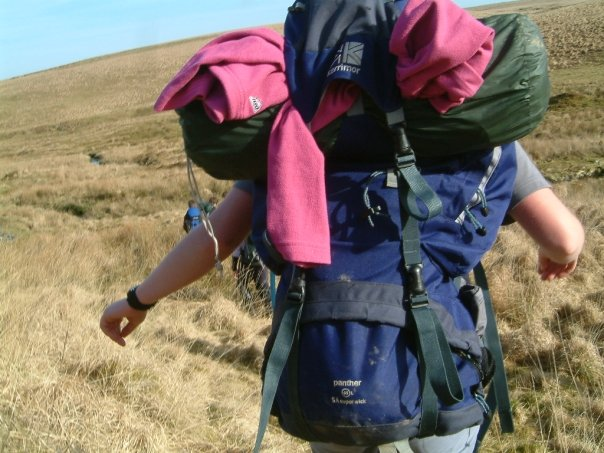
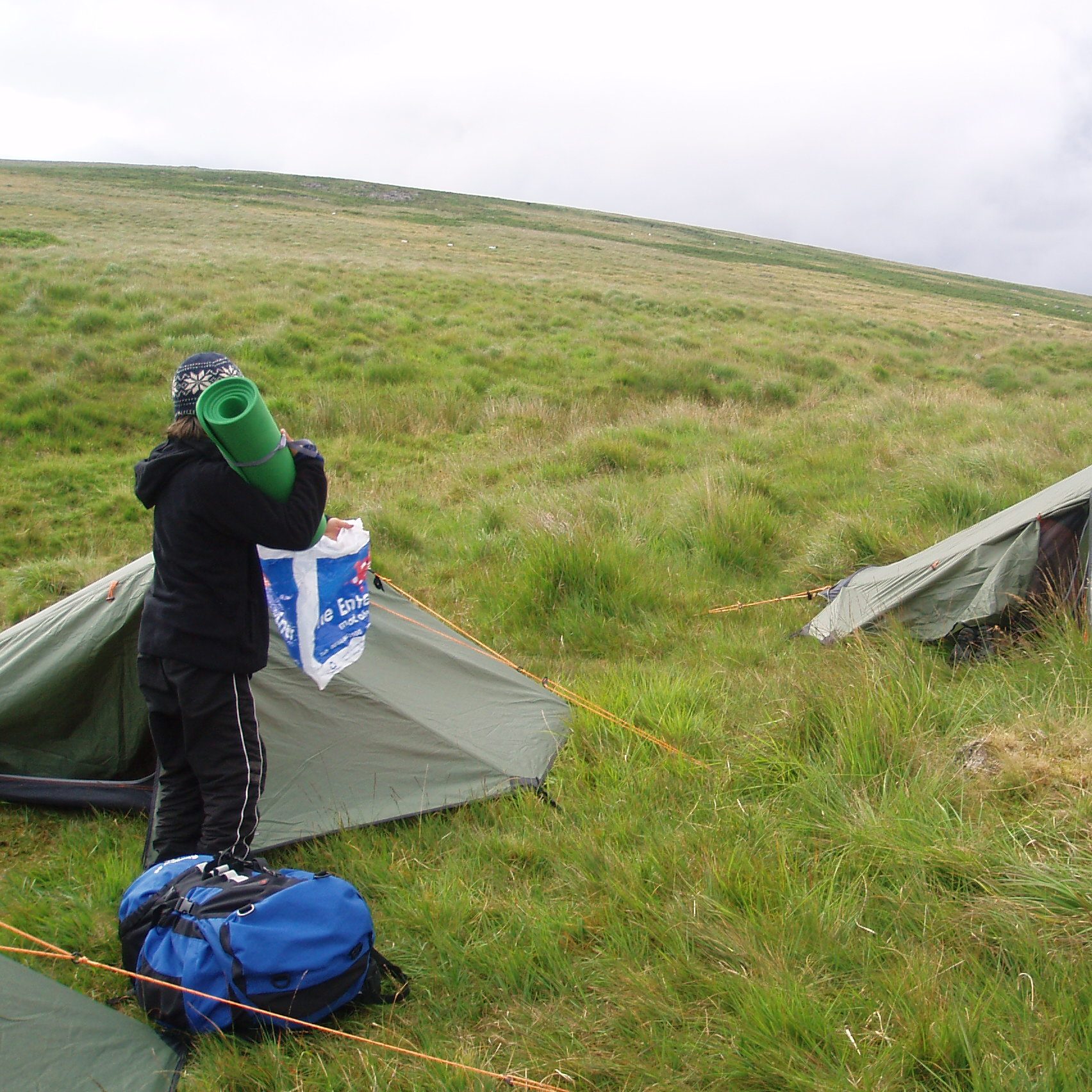
Most commons owners are supportive of responsible backpack camping. This means “leave no trace” camping by individuals or small groups for one or two nights in any place, carrying everything you need in a rucksack.
- What rights do I have to camp on Dartmoor?
- Why is camping restricted on some parts of Dartmoor?
- What is your position on the legal challenge to the right to camp on Dartmoor?
- How can I camp responsibly?
What rights do I have to camp on Dartmoor?
The public has a right to camp on many areas of Dartmoor – a total of over 25,000 hectares. This includes most of the remote parts of Dartmoor, which offer the best experience for backpack campers. This right to camp is recognised in law following the Supreme Court decision of May 2025, which found that the right to camp is covered by the general wording of the Dartmoor Commons Act 1985. It is to be regulated by Byelaws under the Act.
The extensive areas where camping is permitted on the Dartmoor commons are shown in an interactive map on the DNPA website.
However, the legal right to backpack camping only applies to parts of the common land, which is about a third of the overall area of the Dartmoor National Park. Some unenclosed non-common land is now also included in the camping map. Nearly the same area as the commons is enclosed (non-common) land with the right of access under the CROW Act 2000, which does not permit camping without the owner’s consent.
Why is camping restricted on some parts of Dartmoor?
The areas of the Dartmoor commons where the right to camp does not apply are usually places that are deemed at risk of environmental damage. This may be because they are ecologically sensitive areas, or are easily accessible from the roads and have a lot of visitors. In these areas, camping has been restricted under the Byelaws to help protect the environment, as shown in the camping map with the link above.
What is your position on the legal challenge to the right to camp on Dartmoor?
The Dartmoor Commons Owners’ Association recognises the interpretation made by the Supreme Court in its judgement of 21 May 2025, of Section 10 of the Dartmoor Commons Act 1985 and the statutory implications of the Act on property rights.
As we showed in 2023 by our members’ provision of permissive camping over some 25,000 hectares of the commons, we are mostly supportive of genuine, respectful backpack camping that leaves no trace. We will continue to work with Dartmoor National Park Authority in order to maintain access under the 1985 Act and the Dartmoor Byelaws.
This legal action and outcome have done nothing to alleviate the chronic problem of abuse of the Dartmoor commons. This happens frequently, with a significant number of irresponsible visitors causing long-lasting damage to the land and its biodiversity. The judgement does, however, demonstrate that the state must devote more resources to managing the consequences of this provision on Dartmoor’s fragile and important environment.
We ask everyone exercising access rights to do so responsibly to conserve our environment for the benefit of nature and future generations.
How can I camp responsibly?
Anyone camping on the Dartmoor commons must follow the Dartmoor National Park Authority’s Code of Conduct. This is to protect nature and livestock, and to make sure that we can all enjoy the moor.
If it’s not possible for you to follow the Code of Conduct – maybe you’re worried about carrying your rubbish out or need a proper toilet – then Dartmoor has lots of great campsites to use instead. Here is a list of campsites.
If you value the experience of backpack camping on Dartmoor – for yourself and others – then please consider making a contribution to the Donate for Dartmoor fund, which helps to pay for the management of the moor.
This webpage includes text edited from the Dartmoor National Park Authority’s Commons Factsheet dated June 2006.
 Dartmoor Commons Owners Association